
What Is Waldorf Education?
Waldorf education is an approach to learning founded in 1919 by Austrian philosopher and scientist Rudolf Steiner. Steiner developed his educational philosophy, called anthroposophy, around a central belief: that education should develop the whole child — head, heart, and hands — and that what children are taught should match where they are in their development, not where a standardized curriculum says they should be.
Today, there are over 1,100 Waldorf schools in more than 75 countries, making it one of the largest independent school movements in the world. In Palm Beach County, Waldorf School of Palm Beach brings this global tradition to life across two campuses in Boca Raton, serving families from Early Childhood through Grade 11.
Waldorf Education Philosophy at Waldorf School of Palm Beach
At Waldorf School of Palm Beach, the Waldorf education philosophy shapes every aspect of how we teach, what we teach, and when we teach it. For families in Palm Beach County exploring alternatives to traditional education, this page offers a clear picture of what Waldorf education is, where it comes from, and why it remains one of the most respected independent educational movements in the world.
Wondering about cost before you read further? See tuition for Nursery, Kindergarten, and Grades 1 through 11. Tuition assistance and Step Up For Students scholarships are available.
A developmentally rooted, arts-integrated approach to education from Early Childhood through Grade 11 in Boca Raton, Florida.
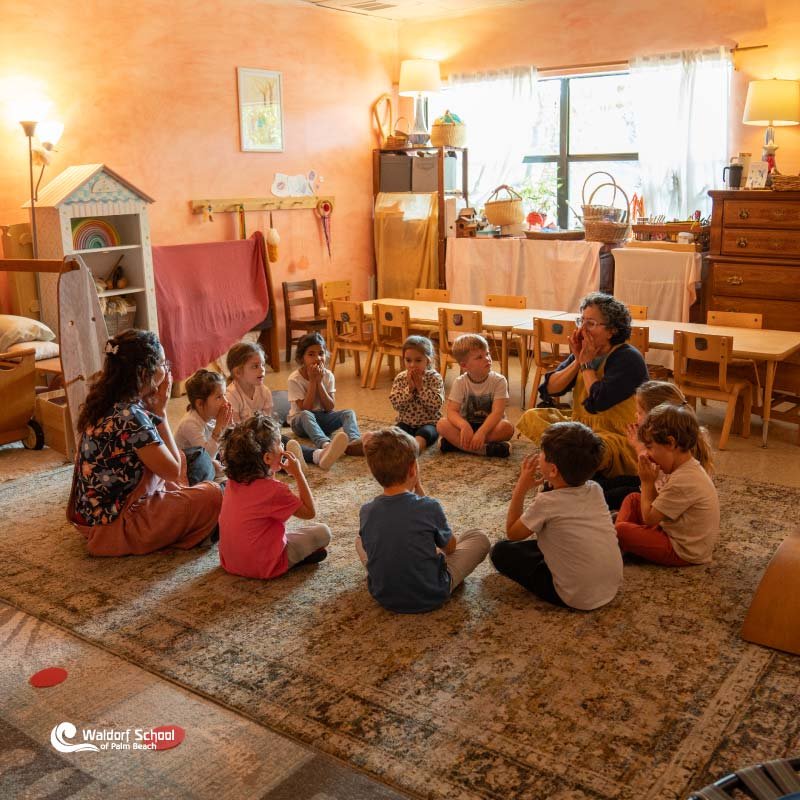
The Waldorf education philosophy is built on the understanding that children move through three distinct developmental phases, each with its own way of learning best. In the early years, children learn through imitation and imaginative play.
In the middle years, they learn through story, imagery, and artistic experience. Then, somewhere around Grade 5, something shifts. The child who accepted a story at face value starts arguing with it. This is where Waldorf education parts ways with most schools. Grades 5 through 8 are not treated as the tail end of elementary school, where the work is to keep children busy until high school. They are treated as the beginning of adolescence, and the curriculum changes to meet it: debate, original research, laboratory science, and questions that do not have one right answer. By high school, students are reasoning independently and defending their own conclusions, which is exactly what college asks them to do.
The Waldorf School Philosophy: Core Principles
The Waldorf school philosophy rests on several principles that distinguish it from both traditional private schools and other alternative education approaches.
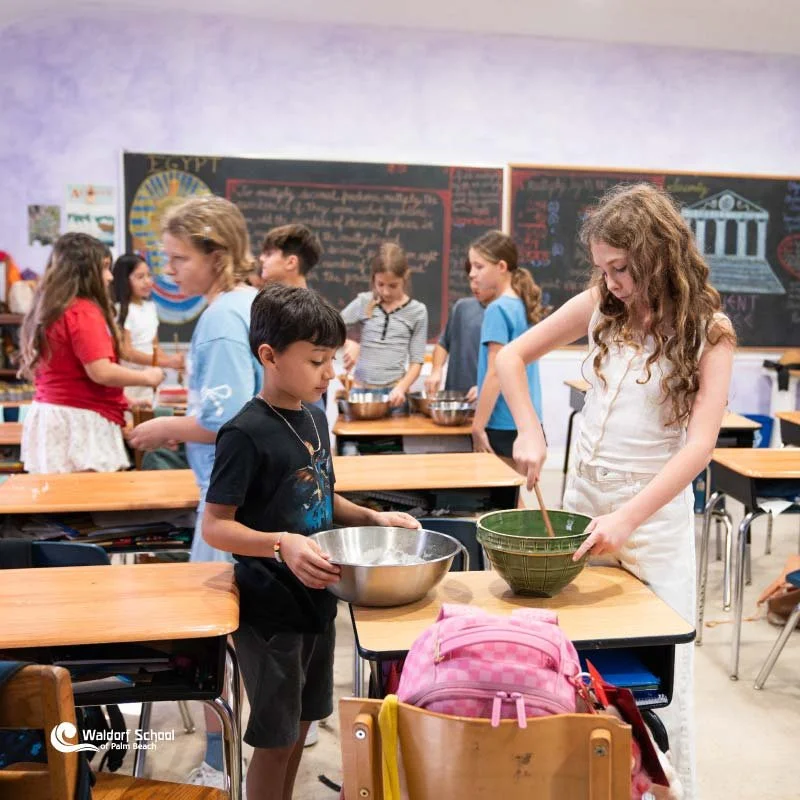
Arts integration is not enrichment. It is the method. In a Waldorf classroom, the arts are not a break from learning — they are how learning happens. Mathematics is taught through rhythm and movement. History is taught through story and drama. Sciences are experienced before they are explained. This approach is not about making school more enjoyable, though it often does. It is about engaging the whole child in every subject, every day.
Two world languages from the early grades. Students at WSPB learn German and Spanish, and they start well before the age most schools introduce a second language. The point is not vocabulary drills. Young children absorb the sound and rhythm of a language the same way they absorbed their first one, through song, verse, and play, long before they are asked to conjugate anything. By the time formal grammar arrives, the ear is already trained.
Developmental appropriateness over standardized pacing. Waldorf education does not introduce formal academic instruction until children are developmentally ready, typically around age seven. Before that, children in our Early Childhood and Kindergarten programs learn through play, imagination, and sensory experience. This is not a delay, but instead a deliberate investment in the foundations that make academic learning meaningful and lasting.
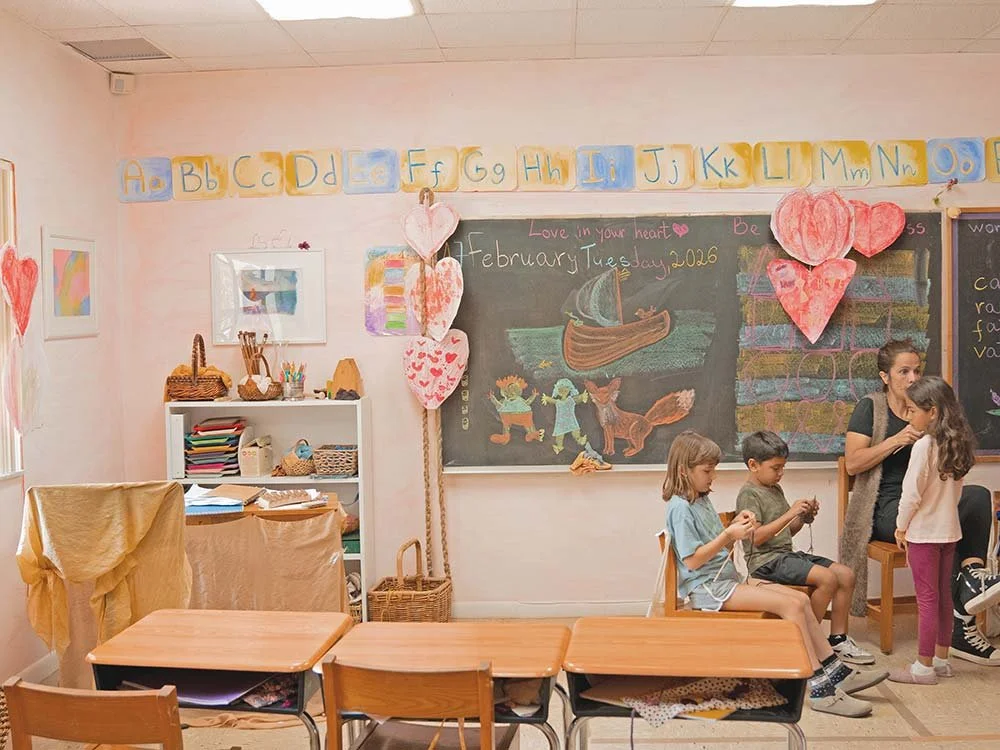
One teacher, eight years. In most schools a child gets a new teacher every August and spends the first two months being figured out again. In Waldorf education, the class teacher stays with the same group from Grade 1 through Grade 8. At WSPB that means the person teaching your child fractions in Grade 3 is the same person guiding their Grade 8 project, and they have watched every step in between. They know which subjects your child avoids and why. They know what happened in your family two years ago. That kind of knowledge cannot be handed over in a file at the end of the year, and it is the single thing Waldorf parents mention most often when asked what they would not give up.
No standardized testing in the early and middle years. Waldorf schools do not use competitive testing or academic placement in the early grades. Teachers use narrative assessments and direct observation to understand each child's growth across the full range of their development. This creates a richer, more honest picture of who each child is becoming.
Seasonal rhythm and community. The Waldorf calendar is anchored in seasonal festivals that bring the school community together throughout the year. At WSPB, celebrations like Michaelmas, the Lantern Walk, the Winter Faire, and May Faire connect students and families to the rhythms of the natural world and to each other.
Waldorf Education at WSPB: How the Philosophy Comes to Life in Boca Raton
Understanding Waldorf education philosophy is one thing. Seeing it in a classroom is another.
In Grade 3, fractions do not start on a worksheet. They start with a block of beeswax that gets warmed, divided, and divided again, until a child has halved something with their own hands enough times that a half is no longer an abstraction. The worksheet comes later, and by then it is describing something the child already knows.
In Grade 7, a main lesson block on medieval history runs for three to four weeks every morning. Students are not reading a chapter and answering questions at the end of it. They are writing original poetry in the forms of the period, illustrating their own main lesson books, and arguing about why people made the choices they made. At the end of the block they have produced something, which is a different experience from having covered something.
By Grade 10, a student stands in front of the full school community and defends an independent research project they chose themselves. No one is grading it against a rubric of what a tenth grader should be able to do. They are responding to the actual work.
That progression is the philosophy. It is not a theory on a wall.
Our two Boca Raton campuses are designed to support Waldorf learning at every stage. The Lower School Campus serves Early Childhood through Grade 4, where the emphasis is on imagination, movement, handwork, and the slow, steady building of foundational skills. The Upper School Campus serves Grades 5 through 11, where academic rigor deepens, artistic work becomes more sophisticated, and students begin developing the independent thinking and ethical judgment that will carry them into adulthood.
For Palm Beach County families who feel that something is missing from conventional education — who want their child to be known, challenged, and inspired rather than ranked and sorted — Waldorf education at WSPB offers a meaningful alternative rooted in over a century of practice and research.
How Waldorf Education Differs from Traditional Private Schools
Parents exploring private school options in Palm Beach County often ask how Waldorf education compares to traditional independent schools. The differences go deeper than curriculum because they reflect a fundamentally different understanding of how children learn, grow, and develop into capable, purposeful adults.
Read our full guide: Boca Raton Private School Guide →
“Being personally acquainted with a number of Waldorf students, I can say that they come closer to realizing their own potential than practically anyone I know.”
“Waldorf Education is not a pedagogical system but an art - the art of awakening what is actually there within the human being.”
Frequently asked questions about Waldorf education philosophy
The Waldorf education philosophy, developed by Rudolf Steiner in 1919, holds that education should develop the whole child across three dimensions: thinking, feeling, and doing. The curriculum responds to three developmental phases of childhood and uses arts integration, experiential learning, and long-term teacher-student relationships as its core methods. The goal is not just academic achievement but the development of creative, purposeful, independent human beings.
Waldorf schools do not use standardized testing in the early and middle years. At WSPB, teachers use narrative assessments and direct observation to track each student's growth across academics, arts, social development, and character. This approach removes the pressure of high-stakes testing while creating a more complete and accurate understanding of each child.
Both Waldorf and Montessori are child-centered alternatives to traditional education, but Montessori emphasizes child-led, self-directed learning with specialized materials, while Waldorf uses a structured, teacher-led curriculum centered on developmental phases, imagination, story, and the arts. Learn more about the key differences between Waldorf and Montessori education.
Yes. Waldorf graduates are accepted to and succeed at universities across the country. The emphasis on critical thinking, independent research, strong communication skills, and self-direction gives Waldorf students a genuine advantage in college and beyond. WSPB's high school program is fully college-preparatory, with honors-level academics, main lesson blocks, and a senior project that demonstrates real intellectual depth.
Waldorf education is structured around three seven-year phases of development. The first phase (birth to age 7) focuses on imitation, play, and sensory experience. The second phase (ages 7 to 14) focuses on imagination, story, and artistic learning. The third phase (ages 14 to 21) focuses on critical thinking, ethical reasoning, and independent judgment. The curriculum at every grade level is designed to meet children where they are in their development.
No. Waldorf education is non-sectarian and spiritually inclusive. While Rudolf Steiner's broader philosophy had spiritual dimensions, Waldorf schools do not teach religious doctrine. Seasonal celebrations at WSPB are based on natural cycles and community tradition, and the school welcomes families of all backgrounds, beliefs, and cultures.
Yes. Waldorf School of Palm Beach is located in Boca Raton and serves families from across Palm Beach County and South Florida, including West Palm Beach, Delray Beach, Boynton Beach, Coral Springs, and surrounding areas. WSPB offers Waldorf education from Early Childhood through Grade 11 across two campuses.
A main lesson block is a three to four week intensive study of a single subject, taught each morning. Rather than moving between multiple subjects every day, students immerse deeply in one area — producing written work, artistic projects, and original research. This block rotation structure is a defining feature of the Waldorf curriculum from elementary school through high school.
Experience Waldorf Education at WSPB
The best way to understand the Waldorf education philosophy is to see it in action. We invite Palm Beach County families to visit our campuses, meet our teachers, and experience a real school day at Waldorf School of Palm Beach.